

For pest control companies with food plant accounts
A food plant’s audit reads your records too.
When a processing plant is audited, the pest control file is part of it: the device map, every service report, the trend, the corrective actions. Pesvaro is built for the commercial pest control company whose work ends up in that file, so every page of it is already written on the morning the auditor arrives.
Client record · sample
Larkmoor Foods · Bakery plant- Areas
- Five, perimeter to packing
- Device network
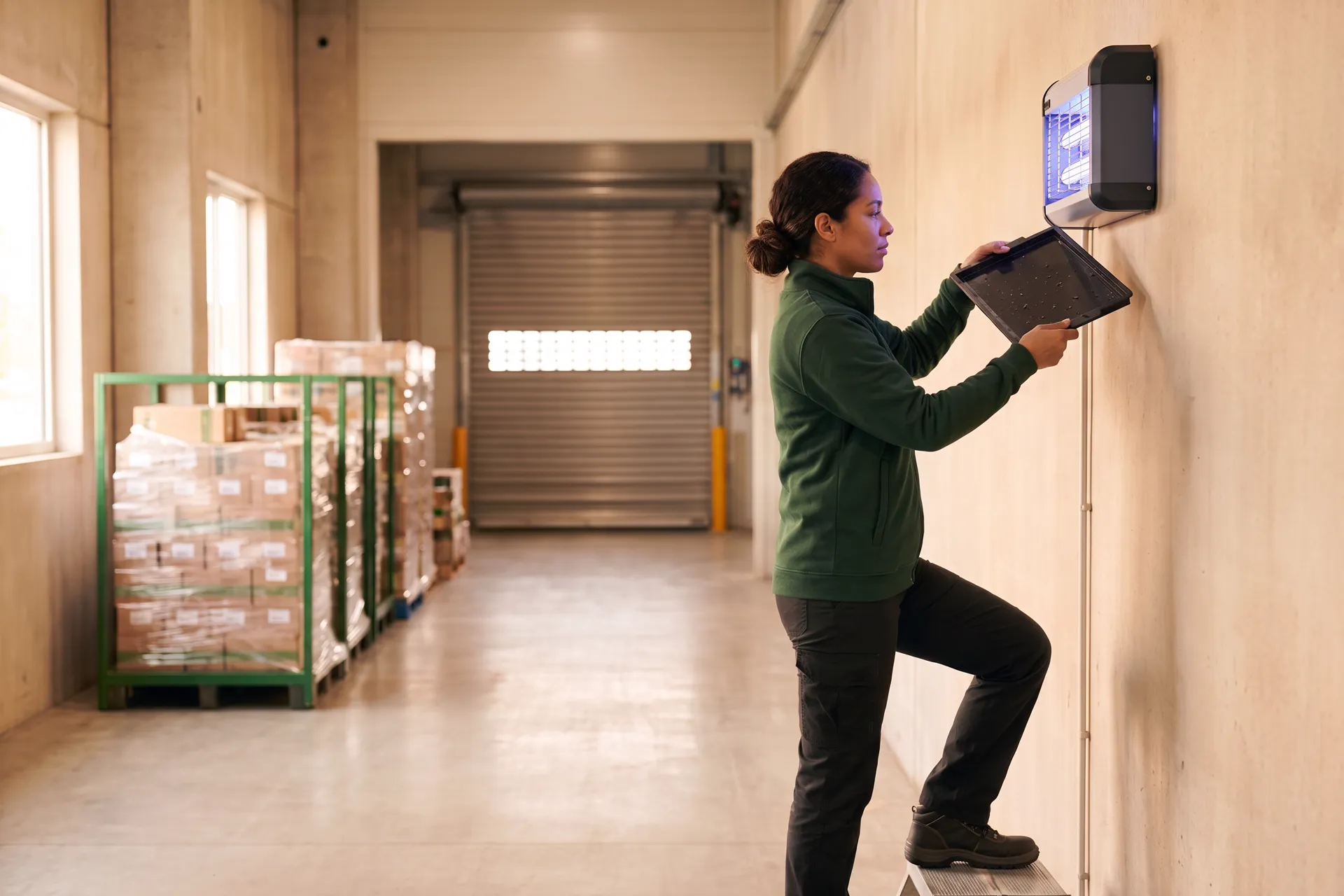
- Exterior stations, interior traps, monitors, fly lights
- Inspections
- Exterior monthly · interior every two weeks
- The client’s audit
- AIB inspection, booked
What food plant clients judge you on
Four things a food plant’s audit asks of its pest control company.
-
Your paperwork is part of their audit
The service record you leave behind sits in your client’s food safety file. An auditor reads your reports and your notes as closely as the plant’s own records, and a gap in yours becomes a finding in theirs.
On the recordEvery inspection recorded device by device, signed and ready to compile.
-
The map has to match the walls
Auditors walk the plant with the device map in hand. A trap moved without the map being changed, or a station number missing from the wall, is the first thing they find.
On the recordOne device map per plant, updated whenever a device is added, moved or replaced.
-
Trends, not just visits
A plant has to show that activity is reviewed over time and that a rise leads to action. A stack of visit sheets doesn’t show that on its own — someone has to read across them.
On the recordActivity levels by area, drawn against the threshold you set for each.
-
Findings closed, with evidence
An open finding from last quarter worries a QA lead more than a new one. Each finding needs an owner, a date and the evidence that closed it.
On the recordCorrective actions with an owner and a date, closed at the follow-up with what was seen.
The audit-morning file
The auditor asks. The record answers, one page at a time.
An audit morning at the bakery plant. The client’s QA lead sits down with the auditor; the questions about pest control come in the order they always do. Each one is answered from the IPM Audit Package you compiled from the rounds.
- Can I see the current device map?
- Show me the last service reports.
- How is activity trending in dry storage?
- Are any corrective actions still open?
Larkmoor Foods · Bakery plantPrepared for the client’s audit fileBeing readHanded over
Device map · current
Every station, trap, monitor and fly light, numbered and placed as it is on the walls today.
Service reports · signed
- Tuesday · inspection round · all five areas
- Two weeks earlier · inspection round · all five areas
- Call-out · loading dock · flying insects
Activity trend · dry storage
One rise to moderate at rack 3, the stock rotated the same week, activity back to none at the next round.
Corrective actions
- Stored-product moths, rack 3 · closed with evidence
- Worn seal, dock door 2 · closed with evidence
- Open now · none
Handed to the auditor by the client’s QA lead — the audit’s result is the auditor’s to give.
Illustration · invented client · sample data
What Pesvaro is built to do
For every food plant you look after.
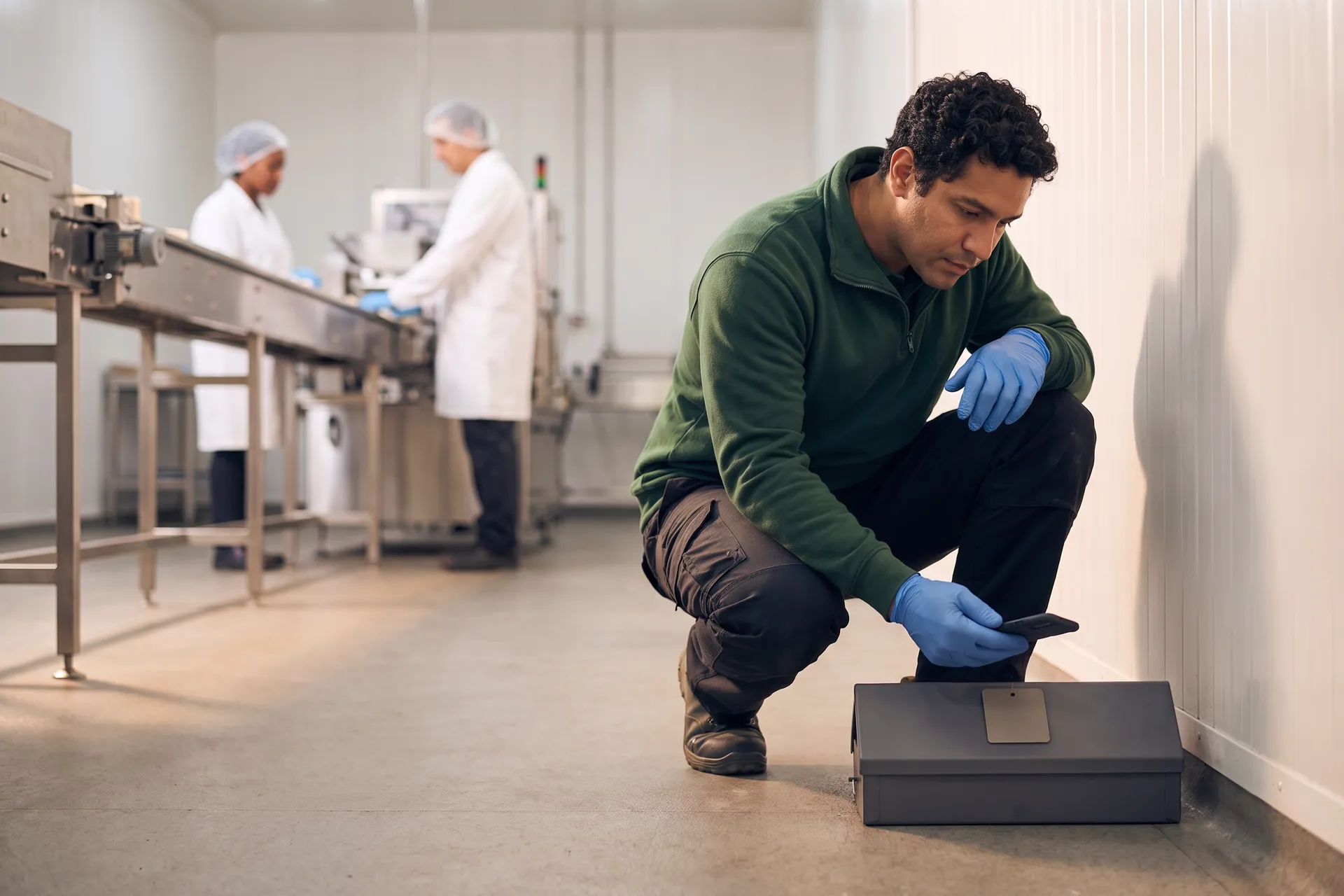
- Keep each plant’s device map current, area by area, from the fence line to packing
- Record every inspection device by device: a QR scan, an activity level, a photo at moderate and above
- Draw each area’s activity against the threshold you set for it
- Follow every finding to closed, with its owner, its date and its evidence
- Compile the IPM Audit Package your client hands its auditor, with a summary you edit
Pesvaro keeps the record. It does not certify audit compliance.
Where your work sits in a food plant
The areas a round walks through, fence to packing.
Each area carries its own devices and its own risks, and each gets its own line in the record.
- Exterior perimeter and fence line
- Receiving docks and dock doors
- Dry ingredient storage
- Production halls
- Packing and finished goods
- Waste, pallets and the yard
Keep reading
The other settings, and the record behind them.
- When the racking movesKeeping a distribution center’s device map true while its floor keeps changing.Read the page
- Before the kitchen opensInspections fitted around service, and findings written for the chef who has to act on them.Read the page
- The whole record, shownThe device network, the inspection round, the trend and the IPM Audit Package on one invented bakery plant.See the records
- The words, definedDevice map, threshold, trend analysis, corrective action — the terms an audit file is written in.Read the glossary
Pesvaro keeps the record your client’s auditor reads. It does not certify audit compliance, and the program and its results stay yours.
Founding access
Have the food plant’s file ready before the auditor asks.
Founding access is open to commercial pest control and IPM companies with food plant accounts. Help shape the device map, the inspection round and the IPM Audit Package before launch.
Launching with a 14-day free trial. No card needed.